Interstellar Comet 3I/ATLAS: A Cosmic Explorer Sharing Its Secrets

Title: Interstellar Comet 3I/ATLAS: A Cosmic Explorer Sharing Its Secrets

Interstellar comets, the original cosmic explorers, have long fascinated astronomers and space enthusiasts alike. These celestial bodies zip through our solar system, offering tantalizing glimpses into the mysteries of the universe. One such interstellar comet, 3I/ATLAS, recently survived its daring flyby of the sun, and in the process, divulged some of its cosmic secrets.

As it skimmed past the sun, the heat caused the icy nucleus of 3I/ATLAS to evaporate. This process, known as sublimation, released a cloud of gas and dust around the comet, creating a visible coma or envelope. As earthbound telescopes monitored this spectacular solar approach, they detected something extraordinary: the metallic whispers of the comet.

These metallic whispers, or traces of metal, are incredibly rare in comets. They are thought to originate from the very heart of the comet, offering invaluable insights into the comet’s composition and its history. By studying these metallic whispers, astronomers hope to unlock the secrets of worlds beyond our solar system that we may never get to see directly.

The survival of 3I/ATLAS and its revealing metallic whispers are significant for several reasons. First, the comet’s survival against the sun’s intense heat demonstrates its resilience, an exciting attribute considering its interstellar origins. Secondly, the metal emissions divulged by the comet contribute to our understanding of the building blocks of our universe.

The information that 3I/ATLAS has provided may also shed light on the conditions of its birthplace. By examining the trace metals in the comet’s coma, scientists can discern the conditions of the comet’s home star system. This information will potentially provide a window into the environments where other interstellar comets form.

Moreover, the study of these interstellar visitors may help us understand the processes that led to the formation of our own solar system. Since comets are remnants from the early solar system, they are like time capsules containing primordial material. Analyzing this material might give us clues about the conditions that led to the formation of planets and possibly even life on Earth.

The cosmic journey of 3I/ATLAS is not over yet. As it continues to traverse our solar system, scientists around the world will keep a close eye on it, eagerly awaiting the secrets it might reveal next. As we learn from these interstellar messengers, we continue to deepen our understanding of the universe, reminding us that we are all part of a vastly interconnected cosmic web.

The tale of 3I/ATLAS is a testament to the wonders of space exploration, shedding light on the mysteries of the cosmos, one metallic whisper at a time.

Read more from the original source here: [https://www.space.com/astronomy/comets/interstellar-comet-3i-atlas-survived-its-flyby-of-the-sun-and-gave-up-some-secrets-in-the-process](https://www.space.com/astronomy/comets/interstellar-comet-3i-atlas-survived-its-flyby-of-the-sun-and-gave-up-some-secrets-in-the-process).

Space News – February 08, 2026

As the Super Bowl Sunday draws near, we’re not just readying our snack bowls and team jerseys for the showdown on the gridiron, we’re also gearing up for a time-honored tradition: the Super Bowl commercials. Over the years, many of these ads have taken us on interstellar voyages far beyond the football field, weaving narratives that blend the fantastical elements of science fiction with the limitless possibilities of space exploration. Today, we’re huddling up to revisit the 10 best space and sci-fi Super Bowl commercials of all time.

1. Amazon’s Alexa Loses Her Voice (2018): A malfunction throws Alexa, Amazon’s virtual assistant, for a loop, leading to a series of comical celebrity replacements including renowned astrophysicist Neil DeGrasse Tyson.

2. Doritos and Mountain Dew’s Lip Sync Battle (2018): Peter Dinklage and Morgan Freeman engage in an epic lip sync battle, with Dinklage representing fiery Doritos Blaze on a backdrop of flaming meteor showers, and Freeman icy Mountain Dew in a frosty, space-like setting.

3. Kia’s Hero’s Journey (2017): Melissa McCarthy transforms into an eco-warrior, saving whales and trees with her Kia Niro, before shooting off to tackle a comet heading toward Earth.

4. Snickers’ Live Commercial (2017): In a daring live ad, a faux sci-fi scene goes awry when a hungry crew member causes an alien monster to flub its lines.

5. Audi’s Daughter (2017): As a young girl competes in a soapbox derby race, her father narrates her journey, likening it to man’s mission to the moon, while promoting gender equality.

6. Avocados from Mexico’s Secret Society (2017): An inept secret society tries to protect the world’s best kept secrets, including the fact that avocados from Mexico are available year-round, all set in a futuristic, sci-fi setting.

7. Squarespace’s Calling JohnMalkovich.com (2017): John Malkovich fights to claim his domain name from a fishing enthusiast, using a laptop in a space station, highlighting the importance of domain ownership in the digital age.

8. Mountain Dew’s PuppyMonkeyBaby (2016): This surreal ad features a hybrid creature part puppy, part monkey, part baby, who fuels a trio of friends with Mountain Dew for an out-of-this-world dance party.

9. Death Wish Coffee’s Vikings (2016): A horde of Vikings, sailing through a stormy sea in a spaceship, represent the intense kick of Death Wish Coffee.

10. Microsoft’s Braylon O’Neill (2015): Showcasing the power of technology, this heartwarming ad features six-year-old Braylon O’Neill, a double amputee using Microsoft’s tech to play sports, while astronauts aboard the International Space Station use the same tech to explore the cosmos.

From comic misadventures to inspiring journeys, these commercials have not only captured the spirit of the biggest game of the year but also our fascination with the cosmos and our enduring love for science fiction. As we look forward to this year’s Super Bowl, it’s safe to say we’re equally excited to see what intergalactic wonders the advertising world will serve up next.

Read more from the original source here: [https://www.space.com/entertainment/best-space-and-sci-fi-super-bowl-commercials-of-all-time](https://www.space.com/entertainment/best-space-and-sci-fi-super-bowl-commercials-of-all-time).

Put Your Space Knowledge to the Test with Space.com’s Crossword Challenge!

Title: Put Your Space Knowledge to the Test with Space.com’s Crossword Challenge!

This week, Space.com invites all space enthusiasts to test their knowledge with a unique crossword challenge. This isn’t just your run-of-the-mill Sunday morning crossword; it’s a quest for the stars, crafted from the biggest headlines of Space.com, the leading source of breaking space news and discovery. One of the key questions in this week’s challenge is, “What type of object is C/2026 A1 (MAPS)?”

For the uninitiated, C/2026 A1 (MAPS) is not a sequence of random letters and numbers but the designation of a celestial body that has been making waves in the world of space exploration. The answer to what type of object it is will not only take you one step closer to completing the crossword puzzle but will also expand your understanding of the cosmos.

This week’s crossword challenge is a fun, engaging way to delve deeper into the mysteries of outer space and keep up with the latest discoveries. It’s designed to stimulate your mind and ignite your passion for the universe, all while providing a fun challenge. Whether you’re an amateur stargazer, a seasoned astronomer, or someone who merely enjoys learning about the cosmos, this crossword puzzle is for you.

Space.com has always been dedicated to bringing space exploration closer to the general audience. With the weekly crossword challenge, the website takes this commitment one step further. It combines education with entertainment, allowing space enthusiasts to learn about space exploration in a fun and engaging way. The crossword puzzle is filled with questions relating to recent discoveries and events, helping participants stay updated with the latest in space exploration.

If you’re keen to test your space smarts, make sure to take part in this week’s challenge. What type of object is C/2026 A1 (MAPS)? Is it a comet, an asteroid, a planet, or something else entirely? The answer might surprise you!

The challenge isn’t only about testing your knowledge, it’s also about learning. Whether you’re able to answer all the questions or find yourself stumped by a few, the aim is to deepen your understanding of the cosmos. And who knows? You just might discover a newfound fascination with the world beyond our own.

So, space aficionados, it’s time to put on your thinking caps and dive into the universe of space exploration. Will you be able to solve the puzzle and answer the question: “What type of object is C/2026 A1 (MAPS)?”

Take the challenge, expand your horizons and have fun while learning about the fascinating world beyond our planet. Remember, every question answered correctly is another step closer to the stars!

Read more from the original source here: [https://www.space.com/astronomy/space-com-headlines-crossword-quiz-for-week-of-feb-2-2026-what-type-of-object-is-c-2026-a1-maps](https://www.space.com/astronomy/space-com-headlines-crossword-quiz-for-week-of-feb-2-2026-what-type-of-object-is-c-2026-a1-maps).

Mercury Unveils its Evening Show: Here’s Your Best Chance to View it This Year

Title: Mercury Unveils its Evening Show: Here’s Your Best Chance to View it This Year

The smallest planet in our solar system, Mercury, is preparing to put on an astronomical show this February. Renowned for its elusive nature, the planet will be putting on its best evening display of 2026, offering earthlings the opportunity to catch a glimpse of it in the post-sunset sky, aided by the backdrop of a helpful crescent moon.

Mercury, often overshadowed by its more visible planetary neighbors, is notoriously challenging to spot due to its proximity to the Sun. However, February presents a golden opportunity for star gazers and space enthusiasts alike. The innermost planet will reach its greatest elongation from the Sun on the evening sky, creating the perfect conditions for it to be observed from Earth.

During this time, Mercury will position itself at a point in its orbit where it appears furthest away from the Sun when viewed from our planet. This alignment will make Mercury shine brightly in the sky, allowing it to be seen without the need for a telescope or binoculars. Its brightness will be further enhanced by the contrasting backdrop of the darkened crescent moon.

While the exact time and visibility of Mercury will depend on your specific location, the general rule of thumb for the best viewing experience is to find a spot with a clear western horizon, free from tall buildings or trees, immediately after sunset. Mercury will appear as a bright ‘star’ in the sky, low on the horizon.

To further enrich your viewing experience, you can make use of various stargazing apps and space websites that provide real-time tracking of planets and stars. These digital tools can point you in the right direction and help you distinguish Mercury from other bright objects in the night sky.

This celestial event is a reminder of the wonders and mysteries our universe holds. It offers individuals, families, and classrooms an engaging way to connect with the cosmos, inspiring curiosity and learning about our solar system and beyond.

In a world where we are increasingly looking towards the stars for answers, events like this bring our cosmic neighborhood to our doorsteps, inviting us to explore, learn, and wonder. Whether you’re a seasoned astronomer or a curious observer, don’t miss out on this chance to witness Mercury’s grand evening performance.

Remember to mark your calendars and ready your eyes for the celestial spectacle that is set to light up the skies this February. Now’s your best chance to see Mercury all year, so make sure you seize the opportunity to witness this spectacle and explore the fascinating world of space from the comfort of your backyard.

Read more from the original source here: [https://www.space.com/stargazing/now-is-your-best-chance-to-see-mercury-2026-heres-what-you-need-to-know](https://www.space.com/stargazing/now-is-your-best-chance-to-see-mercury-2026-heres-what-you-need-to-know).

A Victory for Astronomy: Industrial Plant Threatening Earth’s Darkest Sky Cancelled

Title: A Victory for Astronomy: Industrial Plant Threatening Earth’s Darkest Sky Cancelled

A sigh of relief has echoed through the global astronomy community with the recent cancellation of a green hydrogen plant project that threatened to dramatically increase light pollution in one of the world’s crucial astronomical observation areas.

The company behind the project, which has remained anonymous, had plans to construct an industrial plant near the site of a significant astronomical observatory. The proposed plant’s operations would have generated a significant light pollution, seriously compromising the efficacy of the observatory.

Light pollution, the excessive or misdirected artificial light produced by human activity, is a critical concern for astronomers. It not only impedes the ability to observe celestial bodies but also disrupts ecosystems and has adverse health effects. In the context of astronomy, light pollution washes out starlight and interferes with telescopic observations.

The area under threat is known for its remarkably dark skies, making it a prime location for astronomical observations. The observatory located here is a beacon of scientific research, contributing to our understanding of the universe. It is one of the few places left on Earth where the skies are still dark enough for astronomers to conduct detailed studies of celestial bodies.

Upon the announcement of the plant’s cancellation, astronomers worldwide breathed a sigh of relief. The potential light pollution from the plant would have been a significant blow to the field. The loss of this observation area could have set back numerous ongoing research projects and hindered future astronomical discoveries.

The decision to scrap the project highlights the ongoing tension between industrial development and the preservation of scientific resources. While green hydrogen plants are part of a broader strategy to move towards sustainable energy, their placement needs careful consideration to avoid negatively impacting valuable scientific research areas.

Astronomers and environmentalists hope that this incident will encourage more companies to consider the broader impact of their projects, not just the immediate economic gain. The cancellation of this project is seen as a victory for the preservation of dark skies and the continuation of astronomical research.

Maintaining dark skies is vital for our understanding of the universe. As we continue to brighten the night sky with artificial light, we risk losing our connection with the cosmos. This incident serves as a reminder of the importance of preserving our dark skies, not just for astronomers but for all who value the beauty and wonder of the night sky.

For more on this story, follow the link below:

Read more from the original source here: [https://www.space.com/astronomy/astronomers-relieved-as-industrial-plant-threatening-earths-darkest-sky-gets-cancelled](https://www.space.com/astronomy/astronomers-relieved-as-industrial-plant-threatening-earths-darkest-sky-gets-cancelled).

From Jupiter to Mercury: The Brightest Planets of February 2026 Light Up the Night Sky

Title: From Jupiter to Mercury: The Brightest Planets of February 2026 Light Up the Night Sky

In February 2026, the celestial stage is set for a grand spectacle as Jupiter and Mercury, along with other planets, take their places in one of the year’s most impressive planetary lineups. From the majestic Jupiter shining brightly high in the evening sky to the elusive Mercury glinting low at sunset, February 2026 promises to be a stargazer’s delight.

The cosmic ballet begins with Jupiter, the largest planet in our solar system. This gas giant has been a prominent figure in the night sky since ancient times, its dazzling brilliance capturing the attention of astronomers and laymen alike. In February 2026, Jupiter will be in prime position for viewing, high in the evening sky and radiating a steady, intense light that outshines all other celestial bodies, save for Venus and our Moon.

But the celestial show doesn’t end with Jupiter. As the evening progresses, spectators should direct their gaze towards the horizon to catch a glimpse of the elusive Mercury. Known as the ‘elusive planet’ due to its proximity to the Sun and its resulting difficult visibility from Earth, Mercury will be making a rare appearance in February, low on the horizon at sunset. Despite its small size and lowly position, Mercury’s brightness is not to be underestimated. The tiny planet will be shining with a stark brilliance that belies its diminutive size.

While Jupiter and Mercury are undoubtedly the stars of the February sky, they’re not the only celestial bodies worth noting. The month will also offer excellent views of Mars, Saturn, and Venus. Mars, the red planet, will be visible in the early evening, adding a warm, reddish hue to the twilight sky. Saturn, the ringed giant, will make its appearance later in the night, its subtle, yellowish light providing a gentle contrast to the brighter planets. Venus, the ‘evening star,’ will be a prominent fixture in the western sky after sunset, its dazzling brightness second only to the Moon.

It’s not every year that we get such a fantastic lineup of planets to observe, so astronomy enthusiasts and casual stargazers alike should make the most of this opportunity. So, dust off those telescopes or just lay back and enjoy the view. The February 2026 night sky is set to be a truly spectacular sight.

The beauty of the universe is in its constant change, and the night sky is no exception. From the brightest planets to the most distant stars, each night offers a unique and stunning view of our cosmos. This February, Jupiter and Mercury lead a celestial parade that promises to be one for the record books. So get outside, look up, and lose yourself in the grandeur of the night sky. The cosmos is waiting.

Read more from the original source here: [https://www.space.com/stargazing/brightest-planets-february-2026-night-sky]

Space News – February 01, 2026

As the world eagerly anticipates the first crewed lunar mission in over half a century, Time magazine has rolled out the red carpet with a special commemorative cover issue honoring the Artemis 2 astronauts. Aptly titled “Back to the Moon”, the issue hit newsstands on January 30 and is a testament to humanity’s unyielding spirit of exploration and discovery.

Pioneering a new era of lunar exploration, the Artemis 2 mission, spearheaded by NASA, aims to return humans to the Moon by 2024. This mission is not just a sequel to the legendary Apollo missions, but a stepping stone for future manned missions to Mars and beyond.

Time’s cover features a striking image of the Artemis 2 crew, capturing the essence of their courage and determination. This special issue is not just a tribute to the astronauts, but also an educational resource, offering deep insights into the mission’s objectives, the technology involved, and the potential implications for future space exploration.

The Artemis 2 mission is making history in more ways than one. It will be the first mission to send a woman to the moon, breaking gender barriers and setting a precedent for future space exploration. This momentous event is celebrated within the pages of Time magazine, highlighting the critical role of women in the new era of space exploration.

The “Back to the Moon” issue also features exclusive interviews with the astronauts, giving readers a rare chance to understand their thoughts, fears, and aspirations as they prepare for this monumental journey. From discussing the rigorous training to expressing their hopes for the future of space exploration, the astronauts open up about the legacy they hope to leave behind.

In addition to the astronauts’ narratives, Time magazine dives into the technical aspects of the mission. Detailed features explore the state-of-the-art spacecraft, the Orion, and the powerful Space Launch System rocket, which will carry the crew to the moon. The magazine also delves into the logistical challenges of the mission, providing readers with a comprehensive understanding of the complexities involved in lunar travel.

Another highlight of the issue is a feature on the Artemis Base Camp, the planned long-term habitation zone on the lunar surface. This aspect of the mission is crucial for future space exploration, as it will pave the way for sustainable human presence on the moon, and eventually, on Mars.

Time’s “Back to the Moon” issue is not just a commemoration of the upcoming Artemis 2 mission. It’s a celebration of the human spirit, of our relentless drive to explore the unknown and push the boundaries of our knowledge and capabilities. As we stand on the brink of a new era in space exploration, this special issue serves as a reminder of how far we’ve come and the exciting possibilities that lie ahead.

As the world waits with bated breath for the Artemis 2 mission to take flight, Time’s special issue is a must-read for anyone interested in the future of space exploration. It’s a salute to the brave astronauts who are about to embark on this historic journey and a testament to humanity’s unquenchable thirst for discovery.

Read more from the original source here: https://www.space.com/entertainment/back-to-the-moon-time-magazine-salutes-artemis-2-astronauts-in-special-commemorative-cover-issue.

NASA Gears Up for Final Artemis 2 SLS Test: A Crucial Step towards Moon Mission

Title: NASA Gears Up for Final Artemis 2 SLS Test: A Crucial Step towards Moon Mission

Saturday, Jan. 31, 2026 will mark a crucial milestone for NASA’s Artemis 2 mission as the space agency prepares to undertake the last major test of the Space Launch System (SLS) rocket – the wet dress rehearsal. This test is a critical step forward in the ambitious goal of landing the next man and the first woman on the lunar surface, and it has the world watching with bated breath.

The wet dress rehearsal is a comprehensive test of the rocket’s fueling system. It involves loading the rocket with over 700,000 gallons of super-cooled liquid hydrogen and liquid oxygen and performing all the pre-launch operations, right up until the point of ignition. However, the engines will not be fired during this test. The aim is to ensure that all systems are functioning as expected before the actual launch.

The SLS rocket, the most powerful ever built by NASA, is set to carry a crew of astronauts around the moon in the Artemis 2 mission. The success of this mission hinges on this wet dress rehearsal, a testament to the importance of Saturday’s test.

The Artemis program, named after the twin sister of Apollo in Greek mythology, is NASA’s next giant leap in space exploration, aiming to return humans to the moon and eventually establish a sustainable human presence there by 2024. The Artemis 2 mission, specifically, will mark the first time since the Apollo missions that humans will travel around the moon.

The Artemis 2 mission is integral to NASA’s long-term goal of sending humans to Mars. The moon will serve as a proving ground for the technologies and techniques needed for a journey to the Red Planet. The success of the upcoming wet dress rehearsal will not only be a significant step towards the moon but also a leap towards Mars and beyond.

While the world continues to battle terrestrial issues, NASA’s eyes remain firmly fixed on the stars. The upcoming wet dress rehearsal is a symbol of human resilience and determination, a beacon of hope in uncertain times. The success of this test would not only be a triumph for NASA but for all of humankind, signifying our unwavering spirit of exploration.

As the countdown for the wet dress rehearsal begins, the world waits in anticipation of another historic leap towards space exploration. Observers worldwide can follow the test live, sharing in the thrill and excitement of this significant event.

In the words of NASA’s Artemis program lead, Marshall Smith, “We are going where no one has gone before. It’s a new era of space exploration, and we are excited to lead the charge.”

NASA’s journey back to the moon and beyond continues, and the Artemis 2 SLS wet dress rehearsal is the next big step in that journey. As we look forward to this milestone, we are reminded of the vastness of our universe and our persistent pursuit to understand it better.

Read more from the original source here: [https://www.space.com/news/live/artemis-2-moon-rocket-nasa-fueling-test-jan-31-2026](https://www.space.com/news/live/artemis-2-moon-rocket-nasa-fueling-test-jan-31-2026).

‘The Sixth Nik’: A Deep-Space Odyssey from Bestselling Author Daniel Kraus

Title: ‘The Sixth Nik’: A Deep-Space Odyssey from Bestselling Author Daniel Kraus

Living spaceships, plague planets, and quotes from infamous figures like Josef Mengele make up the bizarre and captivating universe of “The Sixth Nik,” the first sci-fi novel by New York Times bestselling author Daniel Kraus.

Already known for his prolific storytelling in works such as “Whalefall” and “Angel Down,” Kraus has carved a unique niche for himself within the realm of science fiction with this latest release. The novel, which can only be described as a deep-space mystery, is a journey into the unknown that pushes the limits of imagination and explores a universe teeming with bizarre and uncharted territories.

“The Sixth Nik” takes readers on an extraordinary voyage through the cosmos, promising to be a memorable reading experience for all who dare to delve into its pages. The novel is filled with living spaceships – sentient vessels that travel through the cosmos – and plague-ridden planets, offering an intriguing mix of sci-fi and horror elements that Kraus is known for.

The novel also notably includes a quote from Josef Mengele, an infamous figure known for his inhuman experiments during the Holocaust. This unexpected reference serves to add an eerie dimension to the narrative, further expanding the boundaries of Kraus’ storytelling.

While the inclusion of such a quote might seem unconventional in a sci-fi novel, Kraus uses it to provide a chilling juxtaposition between the vast, unknowable mysteries of space and the dark depths of human nature. It’s a constant reminder throughout the narrative that, even as we venture into the unknown, the monsters we’ve known and feared on Earth have a way of following us into the cosmos.

“The Sixth Nik” is far from your typical space odyssey. It’s weird, it’s wonderful, it’s horrifying, and it’s utterly captivating. Kraus has managed to create a universe that’s as vast and mysterious as the one we live in, filled with creatures and concepts that will leave readers pondering long after they’ve turned the last page.

Whether you’re a longtime fan of Kraus or a newcomer to his work, “The Sixth Nik” is sure to be a fascinating addition to your sci-fi collection. It’s a testament to Kraus’ incredible storytelling abilities, and a shining example of how he continues to push boundaries and explore new territories in his writing.

As we continue to explore and understand our own universe, “The Sixth Nik” serves as an exciting and thought-provoking reminder of just how much there is to discover, both within the vast expanse of space and within the depths of the human mind.

Read more from the original source here: [https://www.space.com/entertainment/space-books/living-spaceships-plague-planets-and-a-quote-from-josef-mengele-the-sixth-nik-is-nyt-bestselling-author-daniel-kraus-1st-sci-fi-novel-and-its-really-weird.](https://www.space.com/entertainment/space-books/living-spaceships-plague-planets-and-a-quote-from-josef-mengele-the-sixth-nik-is-nyt-bestselling-author-daniel-kraus-1st-sci-fi-novel-and-its-really-weird)

Rocket Lab’s ‘Hungry Hippo’ Arrives in Virginia: A New Chapter in Space Travel

Title: Rocket Lab’s ‘Hungry Hippo’ Arrives in Virginia: A New Chapter in Space Travel

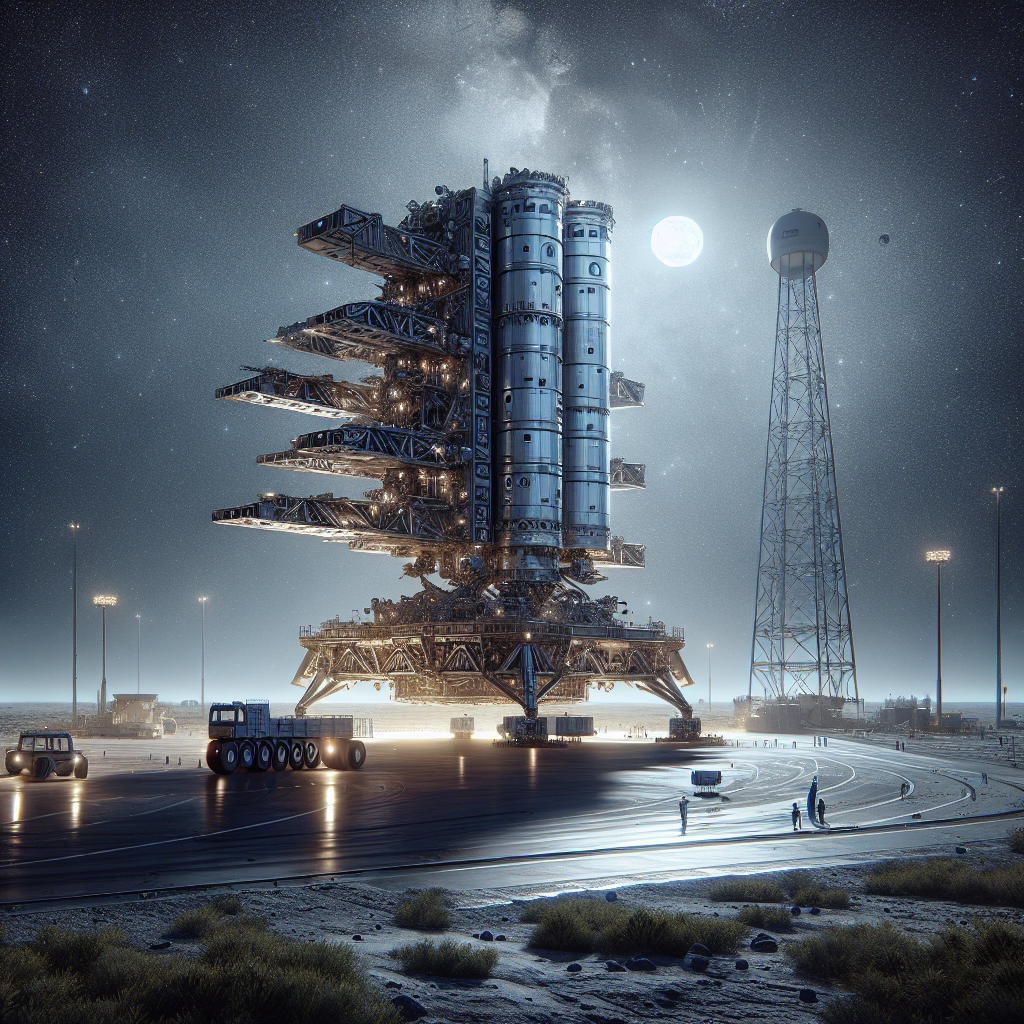
In a significant step towards the future of space exploration, Rocket Lab’s ‘Hungry Hippo’ fairing has arrived at the company’s Virginia Spaceport facilities, marking a new phase in the development of their novel Neutron launch vehicle. The arrival of the ‘Hungry Hippo’ indicates that the company is on track with its ambitious timeline set for the Neutron’s maiden voyage.

The ‘Hungry Hippo’ is not an actual ravenous semi-aquatic mammal, but rather a critical component of Rocket Lab’s Neutron launch vehicle. A fairing, in the context of space travel, is a protective shell that shields the spacecraft’s payload during the harsh journey through Earth’s atmosphere into space. It’s essentially the nose cone of the rocket that takes the brunt of the atmospheric pressure and temperature extremes during launch. Named for its voracious appetite for payload, the ‘Hungry Hippo’ fairing boasts a larger cargo capacity than Rocket Lab’s previous vehicles, allowing the company to deliver more equipment to space in a single launch.

The arrival of the ‘Hungry Hippo’ at the Virginia Spaceport signals the next phase of the Neutron’s development: integration. This is the process of assembling the various components of the launch vehicle and ensuring they function together as a cohesive unit. It’s a critical stage in the development of any spacecraft, and one that will put Rocket Lab’s engineering prowess to the test.

Rocket Lab’s Neutron vehicle is a part of a new generation of reusable rockets. The company aims for the Neutron to be capable of carrying not just satellites but also human passengers into space, demonstrating the rapid evolution of private space travel. The Neutron’s development is a clear signal that Rocket Lab is positioning itself to be a significant player in the burgeoning space tourism industry.

The Neutron’s upcoming journey represents a leap forward in terms of payload capacity for Rocket Lab. The company’s previous launch vehicle, Electron, could carry only about 500 pounds to low Earth orbit, whereas the Neutron is expected to lift up to 8,000 pounds. This significant increase in payload capacity opens up new possibilities for Rocket Lab and its clients, as it allows for more significant and complex missions.

Rocket Lab’s progress in recent years has been remarkable, and the arrival of the ‘Hungry Hippo’ fairing at the Virginia Spaceport is a testament to the company’s dedication and innovation. As the Neutron’s development continues, the world watches with bated breath, eagerly anticipating the next chapter in the exciting narrative of space exploration.

Whether you’re an avid space enthusiast or just casually interested in the cosmic beyond, the ‘Hungry Hippo’s’ arrival in Virginia is a noteworthy event. It symbolizes the rapid advancements in space tourism, the increasing potential for human space travel, and the limitless possibilities that our universe holds.

Read more from the original source here: [https://www.space.com/space-exploration/launches-spacecraft/rocket-labs-hungry-hippo-neutron-fairing-arrives-at-spaceport-in-virginia](https://www.space.com/space-exploration/launches-spacecraft/rocket-labs-hungry-hippo-neutron-fairing-arrives-at-spaceport-in-virginia).