
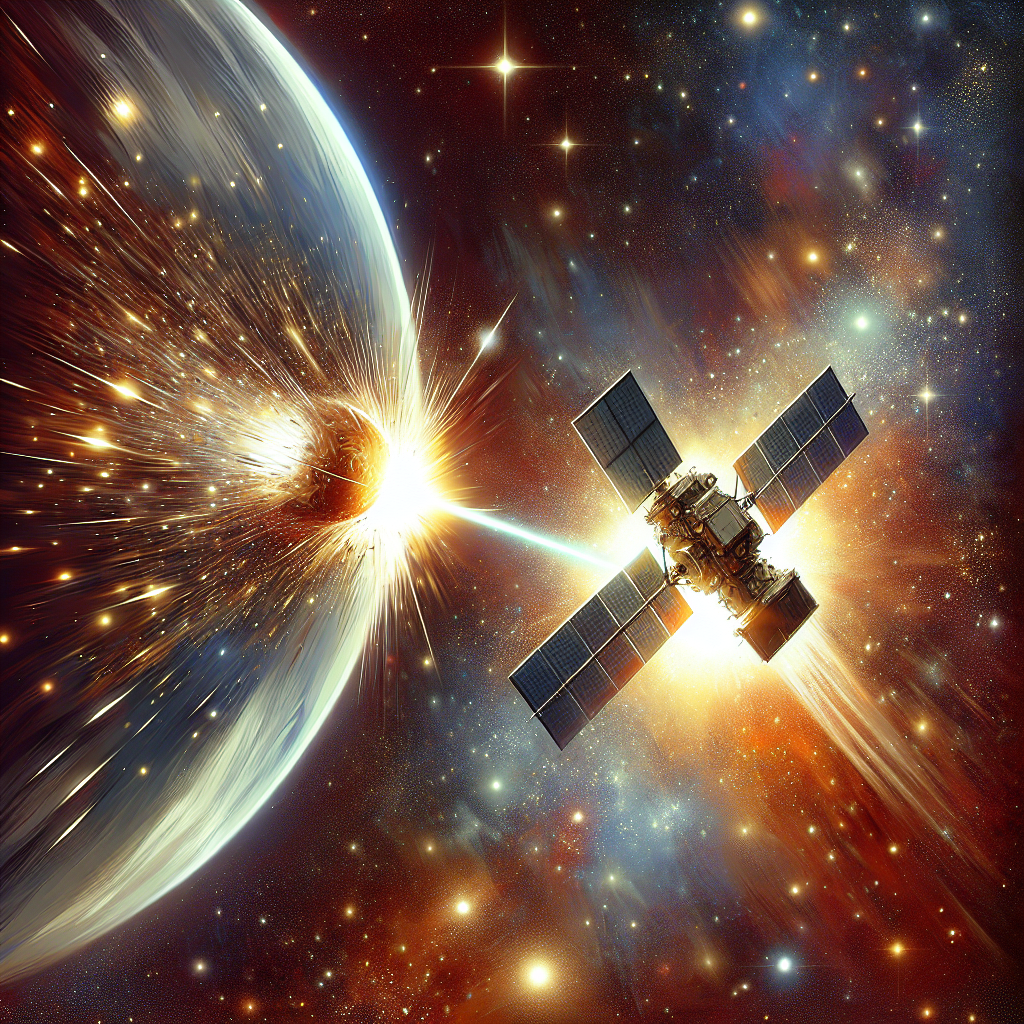
China and NASA Join Forces in Historic Move to Prevent Satellite Collision

Title: China and NASA Join Forces in Historic Move to Prevent Satellite Collision

In a significant first, China recently reached out to the National Aeronautics and Space Administration (NASA) of the United States in a bid to avoid a potential satellite collision. A NASA official confirmed the groundbreaking contact, marking a new chapter in international space cooperation.

The contact was made to align and coordinate a satellite maneuver, a strategic move that reflects the growing need for international cooperation in the increasingly crowded space above our planet. This action, the first of its kind, may pave the way for future collaborations between the two space-faring nations.

“The Chinese side contacted us,” the NASA official said, “This is the first time they have reached out to us for such coordination.” The event signifies a stride towards a more collaborative international space community, especially between two of the world’s leading space powers.

The intricate ballet of satellites orbiting Earth is a carefully choreographed affair. With thousands of artificial satellites from various nations circling our planet, the risk of collisions is ever-present. Such incidents can have far-reaching consequences, including the potential disruption of crucial services like GPS navigation, weather forecasting, and telecommunications.

Historically, China and the U.S. have had a somewhat tumultuous relationship when it comes to space exploration cooperation. U.S. law currently restricts NASA from engaging in bilateral agreements with China due to concerns over technology transfer and potential national security implications. However, this recent outreach from China could be a positive sign of changing dynamics and a new era of cooperation in space exploration.

The specific details of the coordinated maneuver were not disclosed by the NASA official. However, the fact that China took the initiative to reach out to NASA signifies the recognition of shared responsibilities and challenges in managing the crowded space environment.

As the number of satellites and other space debris continues to grow, cooperation between nations is becoming increasingly crucial to ensuring the safe and sustainable use of space. This unprecedented move by China to coordinate with NASA is a promising sign of potential future collaborations.

The incident underlines the necessity for a global approach to space traffic management, where every nation recognizes the need for coordination and cooperation. It also highlights the growing importance of space diplomacy, where nations can set aside earthly politics to ensure the safety and sustainability of space exploration for all.

This historic move by China and NASA could potentially act as a catalyst for further international cooperation in space. It sends a strong message to the world that when it comes to the vastness of space, we are more successful when we work together rather than apart.

Read more from the original source here: [https://www.space.com/space-exploration/satellites/china-reached-out-to-nasa-to-avoid-a-potential-satellite-collision-in-1st-of-its-kind-space-cooperation](https://www.space.com/space-exploration/satellites/china-reached-out-to-nasa-to-avoid-a-potential-satellite-collision-in-1st-of-its-kind-space-cooperation).
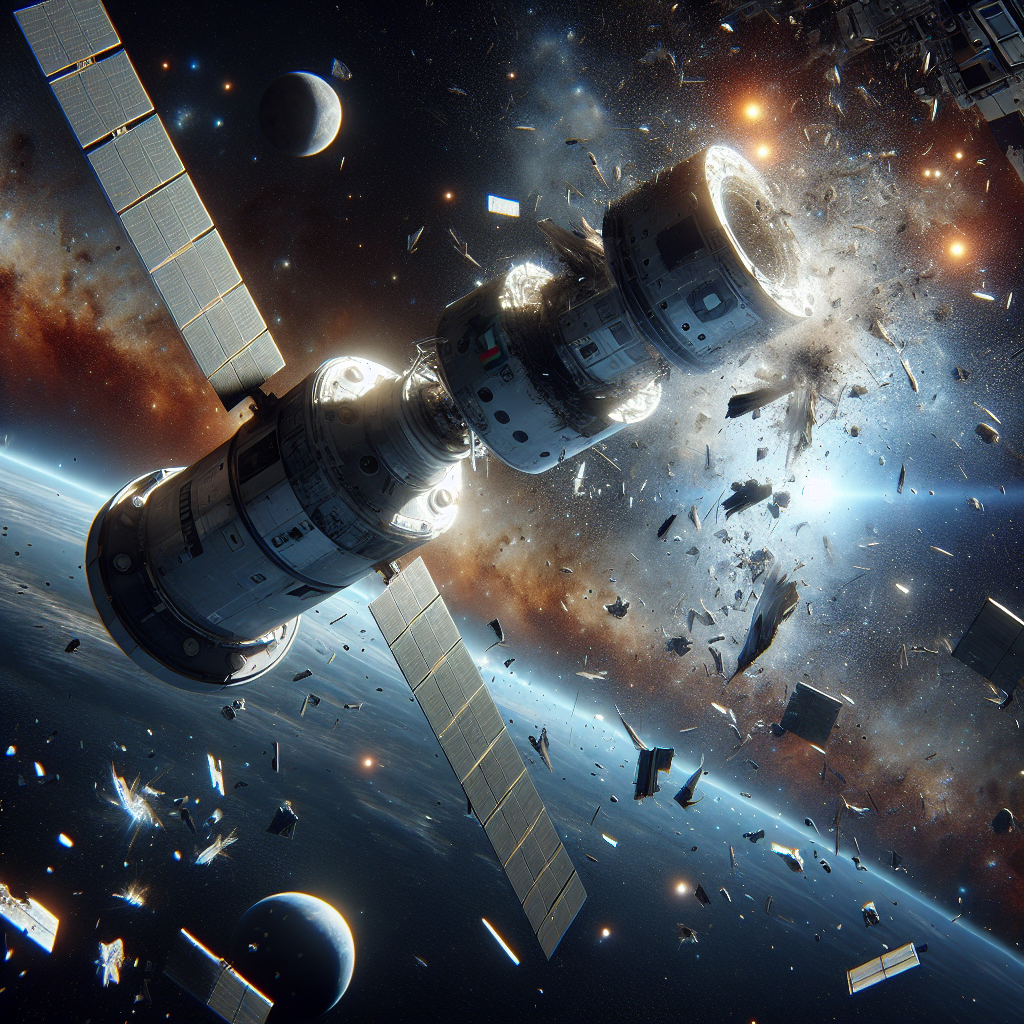
Space Debris Collision Delays Shenzhou 20 Astronauts’ Return

Title: Space Debris Collision Delays Shenzhou 20 Astronauts’ Return

The homecoming of China’s Shenzhou 20 mission astronauts has been delayed due to a suspected collision with space debris. This unexpected incident has highlighted the growing concern around the increasing amount of debris in our planet’s orbit and its potential complications for space exploration.

The Shenzhou 20 mission, launched by China’s space agency, has been a significant step in the country’s ambitious space exploration ventures. The spacecraft, carrying a team of three astronauts, embarked on its journey to China’s space station, Tiangong, for a six-month-long mission. However, the space travelers will have to extend their stay a bit longer than initially planned due to a potential setback.

The suspected incident involves the spacecraft possibly coming into contact with space debris. Space debris, also known as “space junk,” consists of defunct human-made objects, including old satellites, spent rocket stages, and fragments from disintegration and collision events. These pieces, despite their small size, can travel at high speeds and pose a considerable risk to functional spacecraft and satellites.

The extent of the damage suffered by the Shenzhou 20 spacecraft is currently unknown, as the Chinese authorities have yet to release a detailed report. However, the delay in the return of the astronauts suggests that the situation requires careful assessment and possible corrective measures. The safety of the astronauts is, understandably, the top priority.

This incident underscores the growing problem of space debris. As humans continue to launch satellites and spacecraft into orbit, the amount of space debris has increased exponentially. NASA currently tracks over 27,000 pieces of space debris to ensure the safety of ongoing missions. However, the actual number of debris pieces is believed to be much higher, given that tracking smaller pieces is quite challenging.

The international space community has recognized the gravity of the space debris issue. Measures are being taken to mitigate the problem, including the development of technologies for debris removal and regulations to minimize the creation of new debris. However, incidents like this latest one involving the Shenzhou 20 spacecraft underline the urgent necessity for more effective solutions.

Despite the unexpected delay, the mission’s overall objectives remain unchanged. The astronauts will continue to carry out their scientific experiments and maintenance work on the Tiangong space station until their safe return to Earth can be ensured.

The Shenzhou 20 incident serves as a stark reminder of the challenges of space exploration. It emphasizes the importance of innovation and collaboration in addressing the problems that accompany humanity’s quest to explore and understand the final frontier.

The space community worldwide awaits further updates about the condition of the Shenzhou 20 spacecraft and the safe return of its astronaut crew. This incident’s impact will undoubtedly play a significant role in shaping future measures to deal with the issue of space debris.

Read more from the original source here: [https://www.space.com/space-exploration/human-spaceflight/space-debris-may-have-hit-a-chinese-spacecraft-delaying-return-of-shenzhou-20-astronauts](https://www.space.com/space-exploration/human-spaceflight/space-debris-may-have-hit-a-chinese-spacecraft-delaying-return-of-shenzhou-20-astronauts).