
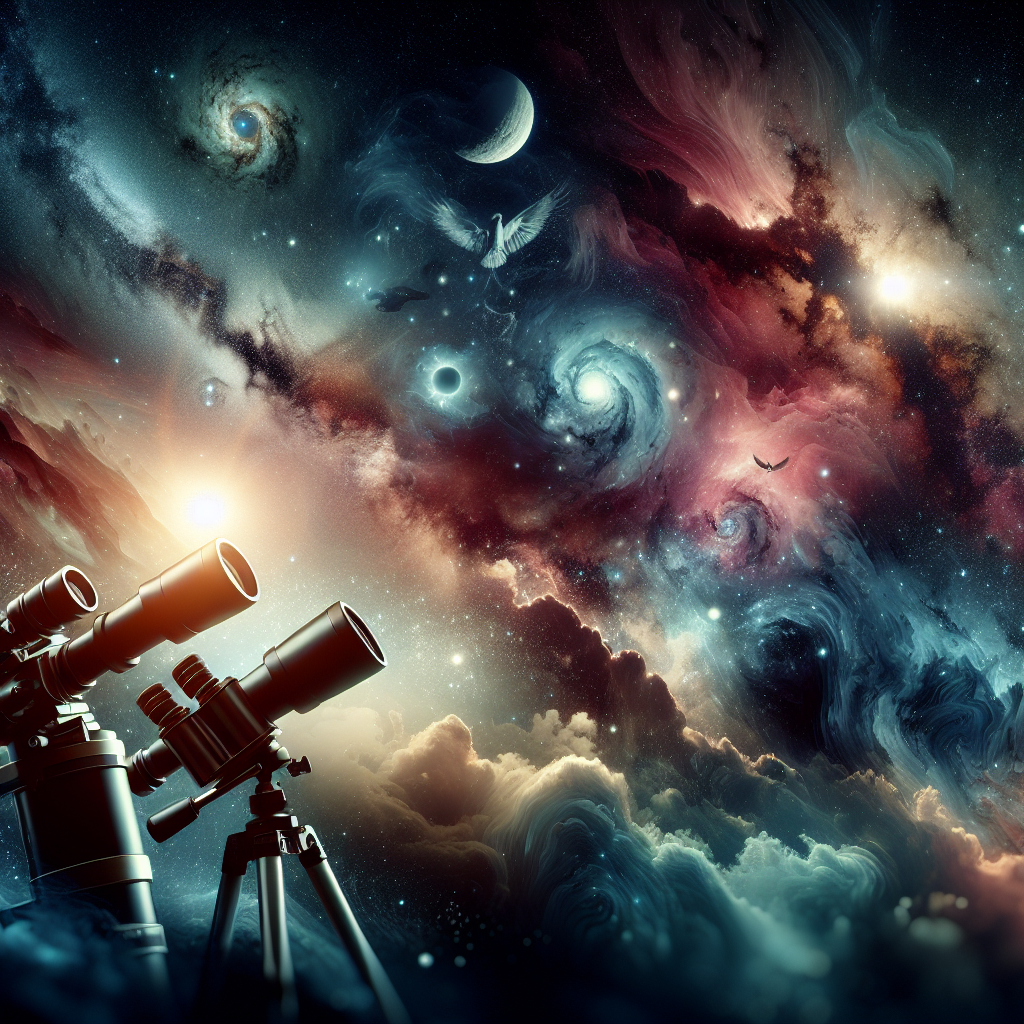
Title: Unveiling the Wonders of the Deep Space with Simple Tools
The wonders of the cosmos are not limited to professional astronomers or those with access to high-end telescopes. With just a pair of binoculars or a simple telescope, you too can uncover the mysteries of deep-space objects.
Before we delve into the how-tos, let’s first understand what deep-space objects are. These celestial entities are located beyond our solar system and include galaxies, nebulae, and star clusters. Galaxies, like our Milky Way, are vast conglomerates of stars, gas, dust, and dark matter. Nebulae are gigantic clouds of gas and dust, which can often be the birthplaces of stars. Star clusters are groups of stars which are gravitationally bound and can range from hundreds to thousands in number.
Now, onto the optics you’ll need to observe these wonders. Binoculars are a great starting point. They’re portable, affordable, and offer a wider field of view than most telescopes, making them excellent for observing large star clusters and brighter galaxies. For binoculars, a specification of 7×50 or 10×50 is recommended. The first number denotes the magnification, and the second refers to the diameter of the front (objective) lens in millimeters. Larger lenses collect more light, making faint objects more visible.
Telescopes, on the other hand, offer higher magnification and are better for observing more distant and fainter objects such as galaxies and nebulae. A beginner-level telescope with a 3 to 5-inch aperture would suffice for most deep-sky observations. Remember, the larger the aperture, the more light the telescope collects, and the better you can see faint objects.
Finally, planning your observing session is crucial. First, identify what you want to observe. Star charts and astronomy apps can help you locate the deep-space objects that are visible from your location and at the time of your observation. Secondly, choose a dark location away from city lights. Light pollution can significantly diminish the visibility of deep-space objects. Lastly, give your eyes about 20 to 30 minutes to adjust to the darkness before you begin observing – this is known as dark adaptation.
With these simple steps, the wonders of the cosmos can be at your fingertips. Exploring deep space doesn’t require high-end equipment or advanced degrees; just curiosity, patience, and a clear night sky. Whether you’re a budding astronomer, a passionate stargazer, or simply curious about the cosmos, this guide is your ticket to the deep-space journey.
Ready to embark on your space exploration?
Read more from the original source here: [A Guide to Observing Deep-Sky Objects](https://www.space.com/stargazing/skywatching-kit/a-guide-to-observing-deep-sky-objects-galaxies-nebulas-and-star-clusters)