Astronauts Seek Refuge in SpaceX Dragon as Cosmonauts Address Air Leak on ISS

Title: Astronauts Seek Refuge in SpaceX Dragon as Cosmonauts Address Air Leak on ISS

Today, aboard the International Space Station (ISS), astronauts found a temporary haven in the attached SpaceX Dragon capsule. This precautionary measure was taken while cosmonauts grappled with a persistent air leak on the Russian side of the orbiting laboratory.

The ISS, a symbol of international cooperation and scientific advancement, has been continuously occupied by international scientists and astronauts since November 2000. In this high-tech fortress floating 408 kilometers above Earth, troubleshooting and problem-solving often take precedence over routine research due to the harsh conditions of space.

The leak, first detected in September 2020, has been a thorny issue for the space station. Although it poses no immediate danger to the crew or the station, it has required ongoing monitoring and intervention. After a series of temporary patches and numerous investigations, the decision was made today to tackle the issue head-on.

The astronauts aboard the ISS transferred to the SpaceX Dragon capsule, a vehicle designed not only for transporting crew to and from the station but also to serve as a lifeboat in emergencies. This move highlights the vital role SpaceX, a private American aerospace manufacturer and space transportation company, plays in maintaining the safety and functionality of the ISS.

While the astronauts hunkered down in the Dragon, the cosmonauts began their work on the Zvezda module, the central hub of the Russian portion of the ISS and the suspected source of the leak. The module, which provides living quarters, life support systems, electrical power distribution, data processing systems, flight control, and propulsion systems, is a critical component of the ISS.

The exact nature of the leak remains unclear, but the repair involves isolation and remediation efforts. The cosmonauts, utilizing their training and expertise, are committed to fixing the issue and ensuring the continued habitability and safety of the space station.

As they work, the world watches, reminded that space exploration is not just about discovery and pushing boundaries, but also about the relentless pursuit of problem-solving and maintaining human life in the vast expanse of the cosmos. Today’s event underscores the importance of the international collaboration that makes the ISS possible and the crucial role of private companies like SpaceX in space exploration and maintenance.

The astronauts have since returned to their regular duties aboard the ISS, with the Dragon capsule remaining on standby should it be needed again. As the cosmonauts continue their efforts to diagnose and repair the leak, they remind us that, in space, even small challenges require significant attention and dedication.

As we marvel at the wonders of space exploration, let’s also appreciate the ingenuity and resilience of those who make it possible.

Read more from the original source here: [https://www.space.com/space-exploration/international-space-station/astronauts-on-international-space-station-take-shelter-in-spacex-dragon-as-cosmonauts-try-to-fix-air-leak](https://www.space.com/space-exploration/international-space-station/astronauts-on-international-space-station-take-shelter-in-spacex-dragon-as-cosmonauts-try-to-fix-air-leak).

Sun Unleashes Triple Solar Flares, Increases Odds for Northern Lights Show

Title: Sun Unleashes Triple Solar Flares, Increases Odds for Northern Lights Show

In an exciting celestial spectacle, three colossal solar flares burst from the Sun in less than 24 hours, causing radio blackouts across Earth and potentially setting the stage for a dazzling display of the northern lights.

Solar flares are explosive outbursts of energy that occur on the surface of the Sun, ejecting massive amounts of solar particles into space. These particles can interact with Earth’s magnetic field, causing disruptions in communication and power systems and, on the brighter side, triggering the radiant phenomenon known as the auroras or northern lights.

The three solar flares, detected by NASA’s Solar Dynamics Observatory, were classified as X-class, the most powerful category of solar flares. This trio of solar eruptions marks one of the most active periods of solar activity in recent years, raising eyebrows and piquing the interest of scientists and space enthusiasts alike.

These solar flares have already had tangible effects on Earth, triggering brief radio blackouts due to the rush of solar particles interfering with our planet’s magnetic field. However, the more enchanting consequence of these gargantuan solar outbursts is the heightened possibility of viewing the northern lights.

The northern lights, or auroras, are a mesmerizing natural light display predominantly seen in high-latitude regions around the Arctic and Antarctic. They occur when solar particles collide with gases in Earth’s atmosphere, causing them to glow. The recent surge in solar activity could supercharge these lights, making them visible even at lower latitudes.

While the radio disruptions caused by solar flares can be problematic, the potential for an enhanced display of the northern lights offers a silver lining. Depending on the trajectory of the solar storms, people residing at higher latitudes may expect a spectacular light show in the coming days.

However, predicting exactly when and where the northern lights will appear can be tricky. Factors such as the speed and direction of the solar winds, the time of night, and local weather conditions can all influence visibility. Those hoping to catch a glimpse of the auroras are advised to stay tuned to the National Oceanic and Atmospheric Administration’s (NOAA) Space Weather Prediction Center forecasts.

This recent burst of solar activity serves as a reminder of the Sun’s powerful and dynamic nature. As our closest star, the Sun’s behavior significantly impacts life on Earth, from the functioning of our technology to the beauty of our night skies. It’s a humbling reminder of our connection to the cosmos and a reason to look up and marvel at the wonders of space.

For those interested in stargazing, the upcoming days may offer a unique opportunity. As we wait to see the potential light show, let’s keep our eyes on the skies and our fingers crossed for clear weather.

Read more from the original source here: [https://www.space.com/stargazing/auroras/sun-erupts-with-3-colossal-solar-flares-in-less-than-24-hours-boosting-chances-for-northern-lights](https://www.space.com/stargazing/auroras/sun-erupts-with-3-colossal-solar-flares-in-less-than-24-hours-boosting-chances-for-northern-lights).

“Catch the Celestial Spectacle: Top 10 Locations to Witness the Total Solar Eclipse of 2026 from Spain’s Prime Vacation Spots”

Title: “Catch the Celestial Spectacle: Top 10 Locations to Witness the Total Solar Eclipse of 2026 from Spain’s Prime Vacation Spots”

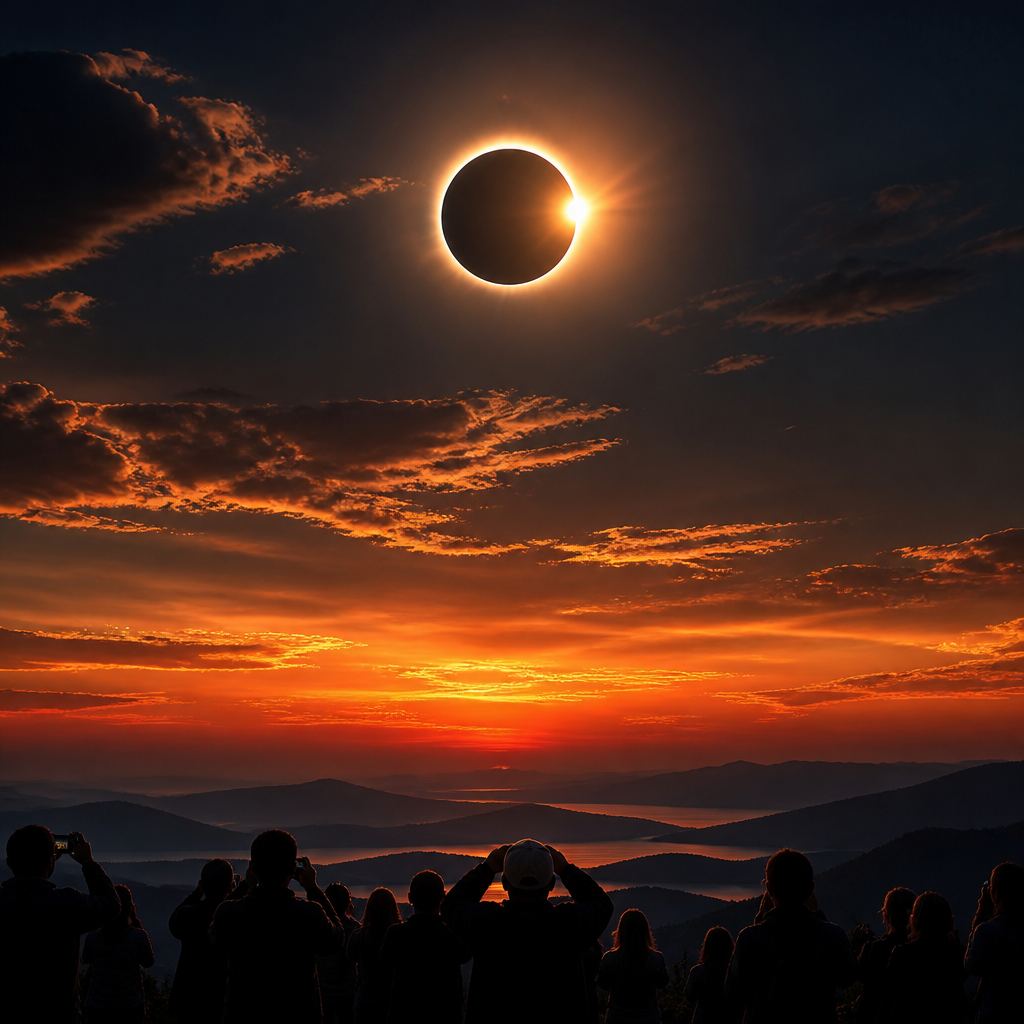
Come August 12, 2026, Spain’s east coast and the Balearic Islands will serve as magnificent stages for a celestial spectacle – a total solar eclipse. From bustling urban beaches to secluded capes, from stoic lighthouses to majestic mountain peaks, we’ve rounded up the top 10 easily accessible locations to witness this breathtaking astral phenomenon.

1. Barcelona’s Beaches: The cosmopolitan city of Barcelona, renowned for its art and architecture, will offer an unobstructed view of the eclipse from its urban beaches. The iconic Barceloneta Beach is an ideal spot to lay down a blanket and watch the moon’s shadow pass over the sun.

2. Valencia’s City of Arts and Sciences: This state-of-the-art complex offers a futuristic backdrop to the ancient dance of celestial bodies. With spacious grounds, it’s a perfect location for a family eclipse-viewing picnic.

3. Alicante’s Santa Bárbara Castle: Perched atop Mount Benacantil, this historic fortress provides a panoramic view of the eclipse. The higher elevation will mean less atmospheric distortion, promising a clearer spectacle.

4. Cape Palos Lighthouse, Murcia: A lighthouse, by definition, is designed to provide clear views across vast distances. Cape Palos is no exception. The lighthouse grounds offer an unparalleled vantage point to observe the solar eclipse.

5. Mallorca’s Serra de Tramuntana: The rocky mountain range in Mallorca, a UNESCO World Heritage site, is a hiker’s paradise. Reach a peak and enjoy a bird’s eye view of the eclipse.

6. Menorca’s Monte Toro: As the highest point in Menorca, Monte Toro offers a 360-degree view of the island, making it an outstanding location to watch the solar eclipse.

7. Ibiza’s Es Vedrà: This uninhabited rock island, shrouded in myths and legends, will provide an eerie and mystical setting to experience the eclipse.

8. Formentera’s Migjorn Beach: This tranquil beach, known for its clear waters and soft sand, will offer a serene backdrop against which to watch the sky darken and then light up again.

9. Almería’s Cabo de Gata-Níjar Natural Park: This geologically fascinating park is another UNESCO World Heritage site that offers an uninterrupted view of the impending celestial show.

10. Tarragona’s Roman Amphitheatre: Combine a taste of history with astronomy by watching the eclipse from this ancient Roman site overlooking the sea.

Each of these locations offers a unique setting to appreciate the total solar eclipse of 2026. Regardless of your choice, remember to use solar viewing glasses or other safe equipment to protect your eyes while watching this spectacular event. As the moon covers the sun, casting an ethereal twilight over these Spanish locales, you will find yourself a part of a timeless celestial ballet that continues to mesmerize humanity.

Read more from the original source here: [https://www.space.com/stargazing/solar-eclipses/10-easy-places-to-see-the-total-solar-eclipse-2026-from-spains-major-vacation-destinations](https://www.space.com/stargazing/solar-eclipses/10-easy-places-to-see-the-total-solar-eclipse-2026-from-spains-major-vacation-destinations).

Forecasters Predict a Quieter 2026 After the Stormy 2025 Atlantic Hurricane Season

Title: Forecasters Predict a Quieter 2026 After the Stormy 2025 Atlantic Hurricane Season

After the tumultuous 2025 hurricane season, which battered coastlines and left a trail of destruction in its wake, experts from the National Oceanic and Atmospheric Administration (NOAA) are predicting a calmer 2026 Atlantic hurricane season.

In 2025, the Atlantic hurricane season was one for the record books, with an above-average number of named storms wreaking havoc across coastal communities. The season saw robust hurricane activity, with several intense storms making landfall and causing significant damage. The devastation left behind has prompted increased focus on hurricane prediction, preparedness, and response.

Now, as we look to the future, NOAA forecasters are predicting a below-normal number of named storms for the upcoming 2026 hurricane season. This prediction may bring a collective sigh of relief to those who endured the ferocity of last year’s storms.

The prediction is based on a combination of climatological factors, including sea surface temperatures, atmospheric conditions, and complex weather patterns. The forecasters use sophisticated computer models and satellite data to analyze these factors and make their predictions. This is where space exploration and meteorology intertwine. Satellites are invaluable tools for meteorologists, as they provide a bird’s-eye view of weather systems, enabling accurate predictions.

However, despite this optimistic outlook, NOAA officials are urging the public to remain vigilant. A below-normal season does not mean an absence of storms. Even a single hurricane making landfall can have devastating consequences, as we’ve seen in the past. Therefore, preparedness remains crucial.

As we move further into the era of space exploration, our understanding of the Earth’s climate system and its interaction with the cosmos continues to grow. Observations from space provide critical insights into our planet’s weather patterns and help to improve the accuracy of forecasts.

The 2025 hurricane season was a stark reminder of the destructive power of nature. The predicted lull in the 2026 season may provide some reprieve, but it also offers an opportunity to bolster our defenses and our understanding of these powerful storms.

The field of meteorology heavily relies on the data provided by space-based assets. This makes space exploration not just about exploring other planets and the cosmos, but also about understanding our own planet better. It underscores the importance of continued investments in space technologies, as they can help us predict and prepare for future natural disasters.

With the 2026 hurricane season on the horizon, NOAA’s predictions offer hope for a calmer year. However, they also serve as a reminder of the continued importance of space exploration in understanding and predicting Earth’s weather phenomena.

Read more from the original source here: [https://www.space.com/astronomy/earth/the-2025-hurricane-season-was-devastating-will-2026-be-calmer](https://www.space.com/astronomy/earth/the-2025-hurricane-season-was-devastating-will-2026-be-calmer).