
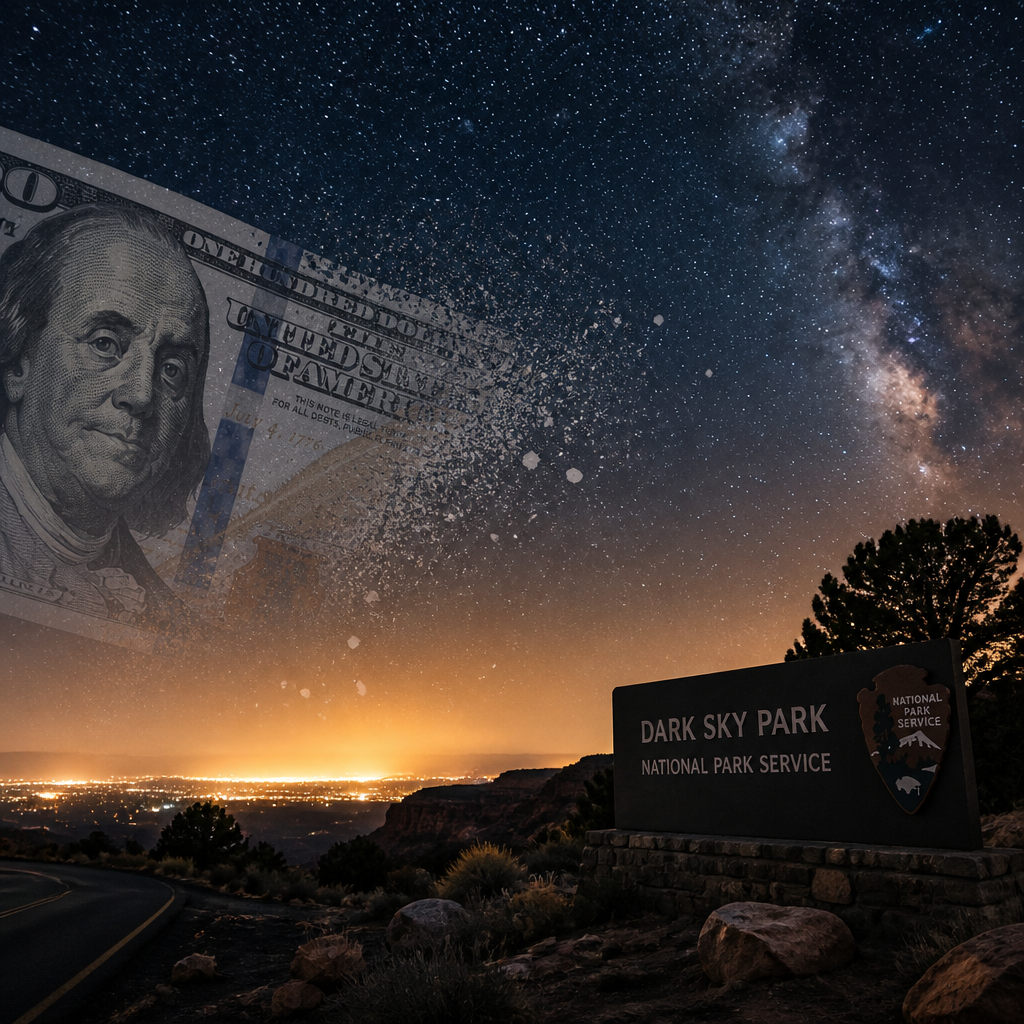
Title: Light Pollution Threatens to Dim Economic Potential of US Dark-Sky Parks
The encroaching problem of light pollution could be costing dark-sky parks in the United States millions of dollars in lost value, according to recent research. These parks, which draw innumerable visitors with their unobstructed views of the stars, are seeing their economic potential fade as the night sky becomes less visible due to increasing light pollution.
Researchers used a combination of satellite data and visitor surveys to determine the economic value of these dark skies, a natural resource that’s becoming increasingly scarce in our brightly lit world. They found that the allure of clear, star-studded skies significantly contributes to the economic value of these parks.
Dark-sky parks are areas recognized for their virtually untouched night skies, free from the excessive artificial light that obscures our view of the cosmos in more populated regions. These parks are a haven for astronomers, stargazers, and anyone passionate about space exploration. They offer an unspoiled glimpse into the vastness of the universe, something which is becoming more elusive with the rise of light pollution.
Light pollution, caused by excessive or misdirected artificial light, not only drowns out the stars but also disrupts ecosystems and wastes energy. It is a global problem that’s especially prevalent in developed countries, where artificial light is abundant. As cities and towns continue to expand and brighten, dark-sky parks are under threat.
The study highlights the economic impact of this issue. By correlating visitor data with the quality of the night sky, the research shows that as the skies darken, visitor numbers and thus economic value increase. It is a clear indication that people are willing to travel and spend to experience the awe-inspiring view of a truly dark sky filled with stars.
However, as light pollution continues to increase, these parks are at risk of losing their main attraction. As the skies above them brighten, their value could decrease by millions of dollars, presenting a significant loss not only for the parks themselves but also for the local communities that benefit from tourism.
The research offers a stark reminder of the value of darkness in an increasingly bright world. It underlines the need for improved lighting policies and practices to preserve these spaces where the universe can be admired in all its glory.
As we look to explore the cosmos further, it’s crucial that we also take the time to preserve our view of it from our own planet. While the impact of light pollution is often discussed in terms of its effect on wildlife and energy consumption, this research emphasizes its economic consequences as well. The fight against light pollution is not just about reclaiming our view of the stars, but also about preserving the economic value of these unique parks.
With the value of dark skies now quantified, the hope is that more effective measures will be taken to combat light pollution and preserve the awe-inspiring beauty and economic value of our dark-sky parks.
Read more from the original source here: [https://www.space.com/astronomy/earth/light-pollution-may-be-erasing-millions-of-dollars-in-value-at-us-dark-sky-parks](https://www.space.com/astronomy/earth/light-pollution-may-be-erasing-millions-of-dollars-in-value-at-us-dark-sky-parks).